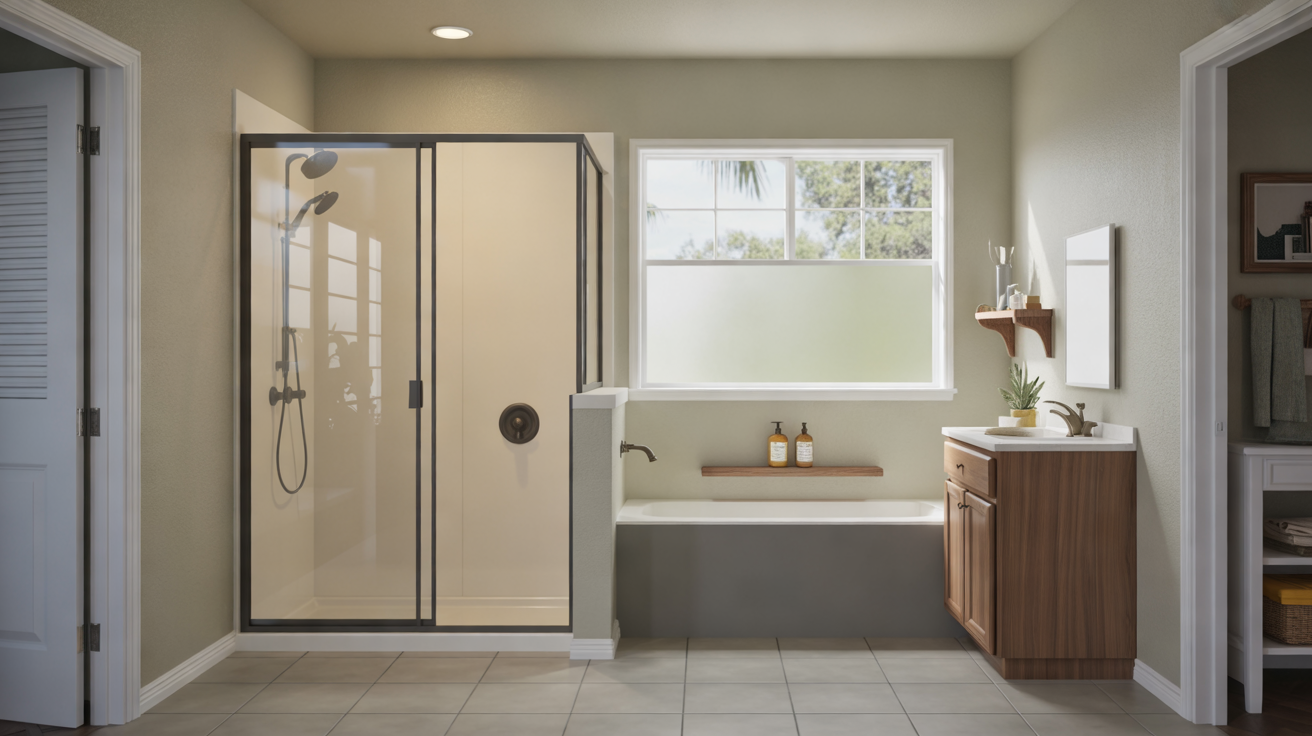
When you are already investing in a shower replacement, it is the perfect time to upgrade your fixtures. Swapping out an old showerhead and valve for modern, efficient fixtures can improve comfort, save water, and give your Cape Coral bathroom a fresh, updated look without dramatically increasing the overall project cost.
This page walks through the main types of shower fixtures, what to consider when choosing them, and how to coordinate upgrades with your replacement project.
Which Shower Fixtures Should You Upgrade?
“Shower fixtures” usually refers to everything you see and touch when you use the shower. During a replacement, consider updating:
- Showerhead(s) – fixed, handheld, or rain heads.
- Valve and controls – the internal mixing valve plus handles or levers.
- Tub spout (if it is a tub-shower combo) – including diverter spout styles.
- Body sprays – optional jets for a spa-like experience.
- Slide bar and brackets – for handheld shower flexibility and accessibility.
- Trim and escutcheons – visible plates, levers, and decorative trim.
- Shut-off valves – hidden plumbing shut-offs for maintenance.
Because walls are already open for a replacement, this is the most cost-effective time to adjust plumbing locations, add extra fixtures, or replace an outdated valve body.
Popular Types of Showerheads
Choosing the right showerhead can transform how your shower feels day to day. Common options include:
Fixed Wall-Mount Showerheads
These attach directly to a wall-mounted arm and are often the simplest, most budget-friendly option.
- Pros: Easy to use, wide variety of styles, simple to replace later.
- Best for: Smaller showers, guest bathrooms, or owners who prefer a straightforward setup.
Handheld Showerheads
Handheld heads connect via a flexible hose and mount to a bracket or slide bar. They are extremely versatile.
- Pros: Great for rinsing, cleaning the shower, washing kids or pets, and improving accessibility.
- Best for: Aging-in-place, multi-user households, and walk-in showers.
Rain Showerheads
Rain heads are usually larger and designed to mimic gentle, overhead rainfall. They can mount from the ceiling or a special extended wall arm.
- Pros: Spa-like feel, sleek look, pairs well with modern walk-in designs.
- Consider: Adequate water pressure, ceiling height, and proper waterproofing above.
Combination Systems
Combination fixtures pair a fixed or rain head with a separate handheld on a diverter.
- Pros: Maximum flexibility; each user can choose their preferred spray.
- Best for: Primary bathrooms where usability and comfort matter most.
Valve and Control Upgrades
The shower valve is the “engine” behind the wall that mixes hot and cold water. When you replace the shower, strongly consider upgrading the valve as well.
Pressure-Balancing vs Thermostatic Valves
| Type | How It Works | Key Benefit |
|---|---|---|
| Pressure-balancing | Maintains a consistent mix of hot/cold when pressure changes | Helps prevent sudden temperature spikes when a toilet flushes |
| Thermostatic | Lets you set an exact temperature independent of volume | More precise, comfortable, and easier for multiple users |
Many homeowners in Cape Coral choose pressure-balancing as an affordable safety upgrade, but thermostatic valves are worth exploring if you want premium comfort.
Single-Handle vs Two-Handle Controls
- Single-handle: One lever controls both temperature and flow. Cleaner look and easy to use.
- Two-handle: Separate controls for hot and cold. Often more traditional in style.
Most modern shower replacement systems favor single-handle controls for a streamlined design and better accessibility.
Style and Finish Choices
Your fixture style should coordinate with your shower walls, doors, and the rest of the bathroom. During replacement, think through finishes and design details so everything works together.
Common Fixture Finishes
- Chrome: Classic, bright, and usually most affordable. Easy to match across brands.
- Brushed nickel: Soft, warm tone that hides fingerprints and water spots well.
- Matte black: Modern, bold contrast that pairs nicely with light tile or acrylic walls.
- Brushed gold/Champagne: Adds warmth and a high-end look without being too shiny.
Mixing too many finishes can make a bathroom feel busy. Aim to keep shower fixtures, sink faucets, and towel bars in the same finish family when possible.
Matching Fixtures to Shower Walls
If you are still deciding on wall materials, you can compare options in the Tile vs Acrylic Shower Walls Comparison. Sleek, minimal fixtures tend to suit acrylic or solid-surface systems, while more detailed trim can complement patterned tile.
Water Efficiency and Local Considerations
Upgraded fixtures are also an opportunity to reduce water use and utility costs while still enjoying a comfortable shower.
- Look for WaterSense labels: These fixtures are independently certified for water efficiency and performance.
- Check flow rates: Many modern heads provide good pressure around 1.75–2.0 gallons per minute.
- Quality over gimmicks: Choose reputable brands and simple, durable spray settings that will hold up to everyday use.
In a coastal climate like Cape Coral, mineral buildup can be a concern. Consider showerheads with easy-clean rubber nozzles to help extend fixture life.
Planning Fixture Locations During Replacement
Because a replacement often involves new walls or a fresh shower pan, this is the time to fine-tune fixture placement for comfort and accessibility.
Height and Positioning Tips
- Showerhead height: Commonly 78–84 inches from the floor, adjusted to the tallest regular user.
- Handheld slide bar: Mount so the lowest setting is easy to reach for shorter users or someone seated.
- Controls: Place where they can be reached without standing directly under the water stream.
If you are also planning for long-term accessibility, the information on Senior-Friendly and Accessible Shower Designs can help you coordinate grab bars, bench seating, and fixtures.
Coordinating Fixtures with Other Shower Upgrades
Shower fixtures are one piece of the larger replacement project. For the best result, think about how they interact with other elements:
- Shower doors: Framed vs frameless doors and hardware color should harmonize with your fixture finish. Learn more in Shower Doors vs Shower Curtains.
- Storage: Combine handheld heads with well-placed niches or shelves so the hose does not interfere with bottles. See ideas in Best Shower Storage and Niche Ideas.
- Flooring and pan: On walk-in or low-threshold showers, confirm that drain placement works with your fixture layout. The Shower Pan Replacement: Materials and Costs guide can be helpful while planning.
DIY vs Professional Fixture Installation
Some homeowners consider replacing showerheads on their own, but full fixture upgrades during a shower replacement are usually best handled by a professional.
- DIY-friendly: Swapping a showerhead or replacing a trim kit on an existing compatible valve.
- Pro-recommended: Moving plumbing lines, installing a new valve body, or adding multiple outlets like body sprays.
If you are weighing your options for the broader project, you may find DIY vs Professional Shower Replacement helpful.
Practical Steps for Choosing New Fixtures
- Define your priorities: Decide if your main goal is comfort, accessibility, style, or water savings.
- Set a fixture budget: Allocate a portion of your overall shower replacement budget specifically for fixtures.
- Pick a finish: Choose one finish that works with existing or planned hardware in the bathroom.
- Select a shower system type: Fixed only, handheld only, combination, or rain plus handheld.
- Confirm compatibility: Make sure valves, trim, and showerheads are designed to work together.
- Plan placement: Review rough-in heights and locations before walls are closed.
- Schedule installation: Coordinate fixture delivery with your shower replacement timeline. For timing questions, see How Long Does a Shower Replacement Take?.
FAQs About Upgrading Shower Fixtures
Do I have to replace the valve when I change fixtures?
Not always, but it is often smart to replace an older valve during a full shower replacement. Access is easier when walls are open, and newer valves offer better temperature control, safety features, and long-term reliability.
Can I add a handheld shower to my existing setup?
In many cases, yes. A handheld can be added with a diverter and additional plumbing. When you are already replacing the shower, adding the necessary rough-in work is much simpler than trying to retrofit everything later.
Will more fixtures mean much higher water use?
Not necessarily. Modern systems can be designed so only one or two outlets run at a time, and efficient showerheads keep flow rates lower while maintaining good pressure.
How do I keep new fixtures looking good in a humid, coastal climate?
Choose durable finishes like chrome or brushed nickel, wipe fixtures dry after use when possible, and follow the manufacturer’s cleaning instructions. Avoid harsh chemicals or abrasives that can damage the finish.
For broader planning help beyond fixtures, you can explore resources like the Shower Replacement Cost Guide, Common Shower Replacement Mistakes to Avoid, and other articles on the Blog.