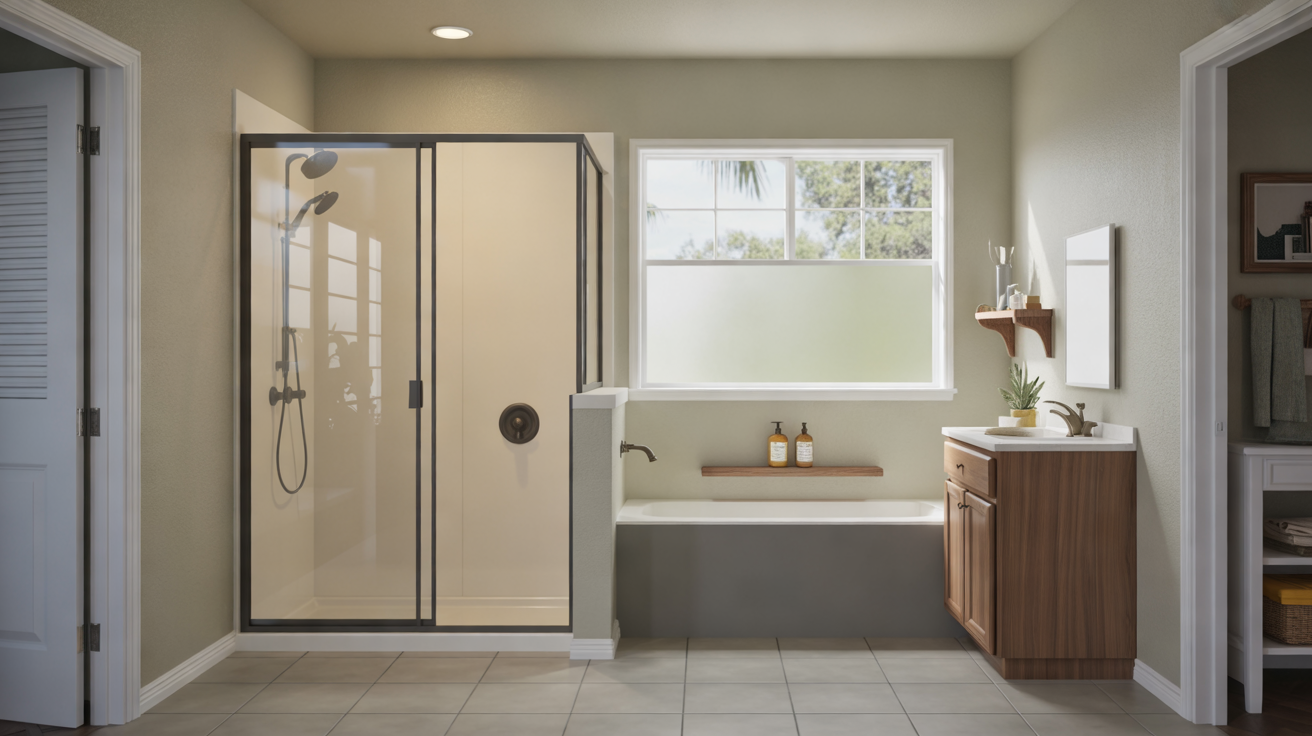
Designing a senior-friendly, accessible shower is about more than comfort. It reduces fall risks, supports long-term independence, and makes daily routines less stressful for older adults and caregivers. In Cape Coral’s humid climate, a well-planned shower can also help prevent slippery conditions and moisture-related issues.
This page walks through the key features, layout choices, and planning steps to create a safer, easier-to-use shower space for seniors and anyone with limited mobility.
What Makes a Shower Senior-Friendly?
A senior-friendly shower focuses on safety, stability, and simplicity. Instead of forcing the user to step over a high tub wall or balance on slick tile, an accessible design keeps movement low, supported, and predictable.
Core safety goals
- Minimize tripping and slipping: Reduce step heights and use non-slip flooring.
- Increase stability: Add secure places to hold onto when entering, exiting, or standing.
- Support different mobility levels: Allow room for walkers, wheelchairs, or a helper if needed.
- Reduce physical strain: Make controls, shelves, and seating easy to reach without stretching.
Key Features of Accessible Showers
Most senior-friendly showers use a combination of the features below. A professional installer can help you choose the right mix for your space and budget.
Low-threshold or barrier-free entry
Traditional tubs and showers may require an 8–15 inch step. For seniors, that is a common point of falls. A safer design uses:
- Low-threshold entries: A small curb (usually 2–4 inches) that is easier to step over.
- Barrier-free (curbless) entries: The shower floor is level with the bathroom floor, often paired with a linear drain.
To compare options and see how they fit into a remodel, you can review low-threshold and barrier-free shower options.
Secure grab bars
Grab bars provide steady support when stepping in, turning, or standing up from a shower seat.
- Placement: Near the entry, along the main wall, and close to seating.
- Installation: Proper blocking and anchoring are critical; avoid relying on suction-cup products as the only support.
- Design: Modern grab bars come in attractive finishes that blend in with other fixtures.
Built-in or fold-down seating
Shower seating reduces fatigue and fall risk, especially for seniors with balance or endurance issues.
- Built-in benches: Permanent, sturdy seating along one wall.
- Fold-down seats: Space-saving and helpful in smaller Cape Coral bathrooms.
- Portable shower chairs: Flexible, but must be combined with non-slip flooring and grab bars.
Non-slip flooring
Wet, soapy surfaces are risky for anyone, but especially for seniors. Choosing the right floor surface is one of the most important safety decisions.
- Textured acrylic bases: Many acrylic shower pans are engineered with slip-resistant textures.
- Small-format tile: More grout lines add traction compared to large smooth tiles.
- Anti-slip coatings or mats: Can add grip but should not replace inherently non-slip surfaces.
For more detail on flooring choices, see non-slip flooring options for shower areas.
Handheld showerheads and easy-to-use controls
Controls should be simple, reachable from a seated or standing position, and easy to operate with arthritic hands.
- Handheld showerheads: Mounted on a slide bar so the height can be adjusted.
- Lever-style handles: Easier to grip than knobs.
- Anti-scald valves: Help maintain a safe, consistent water temperature.
Layout Ideas for Senior-Friendly Showers
The right layout depends on the existing bathroom size, plumbing locations, and whether you are converting a bathtub into a walk-in shower.
Converting a tub to a walk-in shower
Many Cape Coral homeowners replace a tub that is rarely used with a walk-in shower that is safer day-to-day. A typical conversion plan includes:
- Removing the old tub and surround.
- Installing a low-threshold or barrier-free shower pan.
- Adding grab bars, a seat, and a handheld shower.
- Upgrading wall materials and fixtures as needed.
For a deeper overview of what is involved in this type of upgrade, visit the bathtub to shower conversion guide.
Walk-in shower vs. traditional enclosure
For seniors, a walk-in shower is almost always more practical than a traditional tub-shower combo. When planning:
- Allow clear floor space outside the shower for a walker or caregiver.
- Keep controls near the entrance so water can be turned on without getting sprayed.
- Use simple, wide openings instead of narrow doors or awkward angles.
You can explore more layout concepts in walk-in shower replacement options and shower replacement for small bathrooms.
Storage, Lighting, and Visibility
Accessibility is not only about physical support; good organization and visibility help prevent accidents too.
Safe, reachable storage
Shower shelves should be within easy reach and designed to reduce bending and reaching overhead.
- Install niches or shelves at chest-to-shoulder height.
- Avoid cluttered corner caddies that can tip or collect slippery residue.
- Keep heavier bottles on lower shelves, lighter items higher up.
For inspiration, see best shower storage and niche ideas.
Improved lighting and contrast
As vision changes with age, bright, even lighting becomes more important.
- Add dedicated waterproof lighting above or near the shower.
- Use contrasting colors between the shower floor, walls, and grab bars to make edges easier to see.
- Consider anti-fog mirrors outside the shower for grooming tasks.
Planning an Accessible Shower in Cape Coral
Before you begin, it helps to think through both current and future needs. Seniors’ mobility can change over time, so it is wise to build in flexibility where possible.
Step-by-step planning checklist
- Assess current mobility: Consider balance, strength, use of assistive devices, and whether a caregiver helps with bathing.
- Define your must-have safety features: For most seniors this includes a low or no curb, grab bars, slip-resistant flooring, and seating.
- Measure your space: Note doorway widths, plumbing locations, and clearances for walkers or wheelchairs.
- Choose materials: Compare acrylic vs. tile and other wall options based on maintenance and grip. The tile vs acrylic shower walls comparison page can help.
- Decide on doors or curtains: Some seniors find curtains easier to manage than heavy glass doors. Review shower doors vs shower curtains for pros and cons.
- Plan fixture upgrades: This is an ideal time to add anti-scald valves, lever handles, and handheld showers. See upgrading shower fixtures during replacement.
- Talk with a professional: An experienced shower replacement contractor can suggest adjustments based on local codes, structural conditions, and your long-term goals.
Maintenance and Long-Term Ease of Use
A low-maintenance shower is especially important for seniors who may find scrubbing and bending difficult.
- Choose smooth, easy-to-clean wall surfaces with minimal grout.
- Keep glass simpler and avoid tight corners where soap scum builds up.
- Use removable showerheads to make cleaning easier.
For practical tips, visit how to maintain your new shower.
Common Questions About Senior-Friendly Showers
Do we need a full bathroom remodel to improve accessibility?
Not always. Often, a focused shower replacement with better entry, grab bars, seating, and fixtures provides a large safety upgrade without redoing the entire bathroom. You can compare focused shower projects with bigger makeovers on shower replacement vs full bathroom remodel.
How long does it take to install an accessible shower?
Timeframes vary based on materials, plumbing changes, and whether water damage is discovered. Some systems can be installed in as little as a day when conditions are straightforward. Learn more on how long a shower replacement takes and one-day shower replacement: what to expect.
What if we find mold or water damage?
For seniors, hidden damage behind old showers can pose health and safety concerns. Any rot, mold, or structural issues should be corrected before installing a new shower. See water-damage and mold repair before shower replacement for an overview of what is involved.
Is a senior-friendly shower a good investment?
Accessible showers can support aging in place and can also be attractive to buyers who value safety and modern design. For a broader look at return on investment, you can read about shower replacement and home resale value.
Next Steps for Your Accessible Shower Project
Designing a senior-friendly, accessible shower in Cape Coral starts with a clear plan and the right features: a safer entry, non-slip flooring, sturdy grab bars, and simple, comfortable fixtures. To explore your options further, you can browse the blog for related topics, learn about types of shower replacement systems, or review common shower replacement mistakes to avoid before you begin.
When you are ready to talk about your specific bathroom and accessibility needs in Cape Coral, you can use the site’s contact options to connect with a professional and start planning a safer shower space.