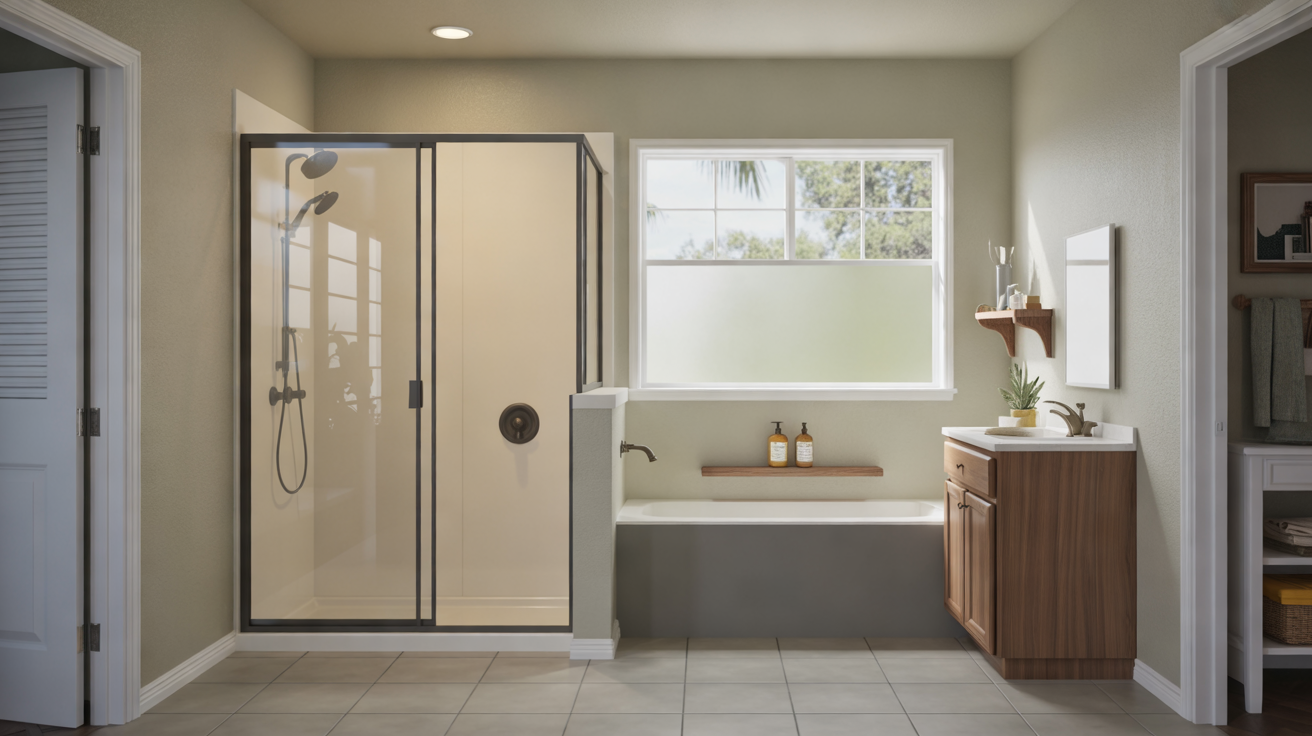
Choosing between tile and acrylic shower walls is one of the biggest decisions in a shower replacement. Both can look great and perform well in Cape Coral homes, but they differ in cost, maintenance, durability, and how they handle our hot, humid climate.
Below is a practical comparison to help you decide which option fits your bathroom, budget, and lifestyle.
Quick Comparison: Tile vs Acrylic Shower Walls
| Factor | Tile Shower Walls | Acrylic Shower Walls |
|---|---|---|
| Upfront cost | Usually higher (material + labor) | Generally lower and more predictable |
| Installation time | Slower: multi-day, grout curing | Faster: sometimes 1–2 days for walls |
| Maintenance | More cleaning; grout can stain | Low maintenance; smooth, non-porous |
| Design flexibility | Very high: sizes, patterns, layouts | Moderate: set colors and patterns |
| Durability | Excellent when properly installed | Very good; can scratch if abused |
| Repair options | Individual tiles can be replaced | Small repairs possible; big damage may need panel replacement |
| Resale appeal | High, especially with quality tile | Good, especially newer solid panels |
How Each Material Performs in Cape Coral’s Climate
Cape Coral’s heat and humidity make moisture control a top priority in shower design. Both tile and acrylic can work well if installed over a proper waterproofing system.
Tile in Humid Conditions
- Water resistance: The tile itself is usually water-resistant, but grout and thinset can absorb moisture if not sealed and maintained.
- Mold risk: Grout lines can discolor or develop mildew, especially in corners and along the floor where water sits longer.
- Thermal movement: With good substrate and expansion joints, tile can handle temperature swings, but poor prep can lead to cracks.
Acrylic in Humid Conditions
- Water resistance: Acrylic wall systems are non-porous, so they do not absorb water.
- Mold resistance: Fewer seams and no grout means fewer places for mold to take hold; caulked joints still need periodic inspection.
- Heat sensitivity: Acrylic is stable in typical bathroom temperatures, but harsh chemicals and abrasive scrubbing should be avoided.
Design and Aesthetic Differences
When Tile Makes Sense
Tile offers nearly unlimited design options and works especially well when you want a fully custom look.
- Styles: From classic subway and coastal-inspired mosaics to large-format porcelain that mimics stone or wood.
- Layouts: Herringbone, stacked, brick-bond, borders, and accent strips allow you to personalize your space.
- Details: Niche surrounds, benches, and feature walls are easier to make into statement pieces with tile.
When Acrylic Shines
Acrylic systems are ideal if you prefer a clean, modern look with less ongoing care.
- Patterns and finishes: Solid colors, subtle textures, and stone- or tile-look panels with minimal or no visible seams.
- Sleek appearance: Works well with walk-in showers and frameless or semi-frameless glass doors.
- Matched components: Many systems coordinate walls, bases, and accessories for a cohesive look.
For more style ideas specific to showers, visit the Custom Shower Replacement Design Ideas page.
Installation Time and Disruption
Tile Installation
- Requires substrate preparation, waterproofing, tile setting, grouting, and curing.
- Typically takes several days or more, depending on shower size and tile complexity.
- More construction noise and dust, plus a longer period without a working shower.
Acrylic Installation
- Prefabricated wall panels are cut to fit and installed over a prepared, waterproof surface.
- Many projects are completed faster than tile; in some cases, within a day for the walls alone.
- Less messy and more predictable in schedule.
For a broader overview of timelines, see How Long Does a Shower Replacement Take?
Maintenance and Cleaning
Maintaining Tile Shower Walls
- Routine cleaning: Non-abrasive cleaners and a soft brush or cloth, with extra attention on grout lines.
- Grout care: Sealing grout (and resealing as recommended) helps resist staining and moisture.
- Repairs: Cracked grout or loose tiles should be fixed quickly to prevent water getting behind the wall.
Maintaining Acrylic Shower Walls
- Routine cleaning: Mild soap or a manufacturer-approved cleaner and a soft cloth or sponge.
- Avoid: Abrasive pads, harsh chemicals, or sharp tools that can scratch or dull the surface.
- Caulk lines: Inspect and renew caulk as needed to keep joints watertight.
For long-term care tips for both materials, visit How to Maintain Your New Shower.
Durability, Lifespan, and Repairs
Tile Walls
- Lifespan: When built over a solid waterproofing system, tile can last decades.
- Wear and tear: Porcelain and ceramic tile resist scratches and heat well.
- Repairability: Individual tiles can be removed and replaced if damaged, assuming matching tile is available.
Acrylic Walls
- Lifespan: Quality acrylic wall systems can also last many years with proper care.
- Wear and tear: Surface can scratch if cleaned with abrasive tools or harsh products.
- Repairability: Minor scratches can sometimes be buffed; larger damage may require panel replacement.
Cost Considerations
Exact pricing depends on your bathroom layout, product selection, and labor, but these general trends can help you plan:
Tile Cost Factors
- Tile type (ceramic vs porcelain vs natural stone).
- Size and layout complexity (mosaics and patterns take more time).
- Extra features like niches, benches, and decorative borders.
Acrylic Cost Factors
- Wall system brand and thickness.
- Color/finish (stone- or tile-look panels can cost more than basic white).
- Optional accessories such as shelves, grab bars, and seats.
For a broader look at budgeting for a new shower, see the Shower Replacement Cost Guide and Financing Options for Shower Replacement.
Which Is Better for You: Tile or Acrylic?
Use the questions below to narrow down your choice:
Tile May Be Better If You:
- Want a highly customized, designer look.
- Are comfortable with a bit more maintenance and grout care.
- Plan to stay in the home long term and want a feature that can boost resale appeal.
Acrylic May Be Better If You:
- Prefer quick installation and less disruption.
- Want a low-maintenance shower with no grout lines to scrub.
- Are updating a rental, guest bath, or secondary bathroom and need a practical, durable solution.
If accessibility is a priority, both materials work well with low-threshold or barrier-free designs. You can learn more on the Low-Threshold and Barrier-Free Shower Options and Senior-Friendly and Accessible Shower Designs pages.
FAQs About Tile vs Acrylic Shower Walls
Will acrylic shower walls look “cheap” compared to tile?
Modern acrylic systems often include textured and stone-look options that look more upscale than older plastic surrounds. While high-end tile still offers the most luxurious appearance, quality acrylic can look clean, modern, and attractive, especially when paired with good lighting and glass doors.
Can I combine tile and acrylic in the same shower?
Yes. Some homeowners use acrylic for the main walls and add a small tiled accent area, or they use tile on the bathroom floor and niches while keeping acrylic on the walls. Your installer can explain what combinations work best structurally.
Which option is better for a small bathroom?
Both can work. Acrylic’s thinner walls and light, seamless appearance can make small spaces feel more open. Tile lets you use larger-format pieces and lighter grout to reduce visual clutter. For more ideas, visit Shower Replacement for Small Bathrooms.
Is one material more “eco-friendly” than the other?
It depends on the specific products and how long they last in your home. Long-lasting installations reduce waste. Some tile and acrylic products may also have recycled content or low-VOC manufacturing. For a deeper look, see Eco-Friendly Shower Replacement Materials.
Should I install tile or acrylic myself?
DIY tile work is challenging and mistakes can lead to leaks and costly repairs. Acrylic wall systems are often simpler but still require careful prep and waterproofing. The DIY vs Professional Shower Replacement guide explains the pros and cons of each approach.