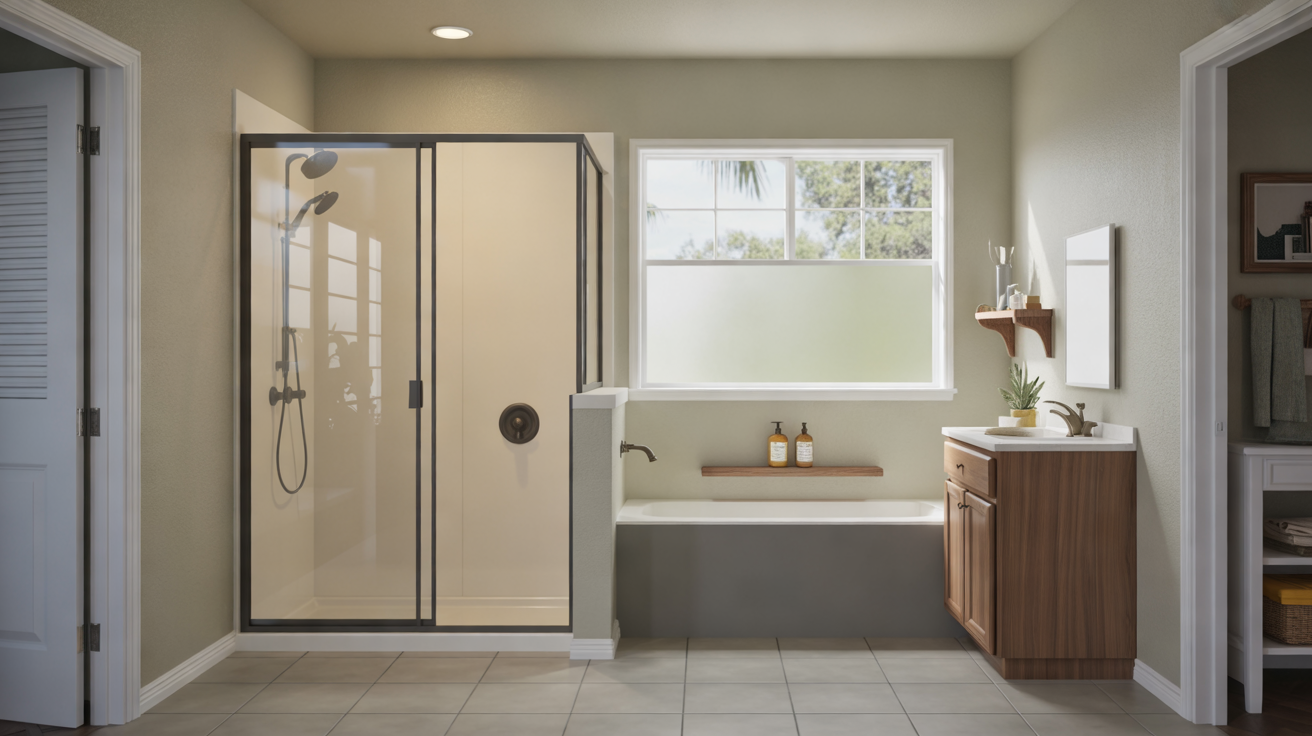
Shower pan replacement is one of the most important parts of a shower remodel. The pan (or shower base) is what keeps water contained and directed to the drain. When it fails, you can end up with leaks, mold, and structural damage—especially in a humid climate like Cape Coral, FL.
Below is a clear breakdown of shower pan materials, how they compare, what you can expect to pay, and when it makes sense to replace the entire shower instead of just the base.
When Do You Need a New Shower Pan?
Some shower pan problems can be repaired, but others call for full replacement. Common signs you need a new pan include:
- Persistent leaks around the base of the shower or on the ceiling below.
- Soft or spongy floor when you step into the shower.
- Cracks in the surface that keep returning even after patching.
- Stains, mildew, or musty odors that don’t go away with cleaning.
- Water damage or mold discovered behind walls or under flooring near the shower.
If you’ve already found water damage or mold, have that addressed before installing a new pan. You can learn more about that process on our page about water-damage and mold repair before shower replacement.
Common Shower Pan Materials
Most homeowners in Cape Coral choose from a handful of popular shower pan materials. Each has different benefits for durability, comfort, maintenance, and style.
Acrylic Shower Pans
Acrylic bases are made from molded plastic that’s reinforced underneath.
- Pros: Lightweight, warm underfoot, non-porous, easy to clean, available in many sizes and drain locations.
- Cons: Can scratch, and very heavy objects can crack the surface if dropped.
- Best for: Most standard shower replacements when you want a low-maintenance, budget-friendly option.
Fiberglass Shower Pans
Fiberglass is another molded option, usually lighter and slightly less expensive than acrylic.
- Pros: Affordable, quick to install, widely available.
- Cons: Finish can dull over time, more prone to flexing and hairline cracks, repairs may be visible.
- Best for: Secondary bathrooms, rental properties, and budget-conscious projects.
Tile Over a Custom Shower Pan
This style uses a waterproof liner and mortar bed (or modern foam tray), then tile is installed on top.
- Pros: Fully customizable size and shape, high-end look, great for walk-in and barrier-free showers.
- Cons: More complex installation, grout requires maintenance, quality depends heavily on installer skill.
- Best for: Custom designs, large showers, and projects where style and flexibility matter more than basic cost.
Solid Surface and Cultured Stone Pans
These pans are cast from materials like cultured marble, quartz-like composites, or other solid surfaces.
- Pros: Sleek appearance, durable, low-porosity, fewer seams than tile.
- Cons: Heavier, may require extra floor support, higher material cost.
- Best for: Mid- to high-end remodels where you want a more upscale look without full custom tile.
Cast Iron or Porcelain-Coated Steel Pans
Less common in modern projects, these are very rigid metal pans coated with enamel.
- Pros: Extremely durable, classic appearance, very solid feel.
- Cons: Very heavy, installation can be more difficult, chips in the finish can rust.
- Best for: Specific design styles or historic homes when structure can handle the weight.
Cost Overview for Shower Pan Replacement
Actual costs depend on the pan material, shower size, and the condition of the subfloor and plumbing. Labor rates and material availability in the Cape Coral area also play a role. The ranges below are typical ballparks for many homes, not quotes.
| Material | Relative Cost | Notes |
|---|---|---|
| Fiberglass | Lower | Often the least expensive option for both materials and labor. |
| Acrylic | Lower to Mid | Popular balance of cost, comfort, and durability. |
| Tile over custom base | Mid to Higher | More labor-intensive; cost varies with tile selection and layout. |
| Solid surface / cultured stone | Mid to Higher | Higher material cost, but usually simpler to clean and maintain. |
| Cast iron / steel | Mid to Higher | Durable but heavy; may add labor or structural work. |
In addition to the pan itself, budget for:
- Demolition and disposal of the old base and any damaged materials.
- Subfloor repair or reinforcement if water damage is present.
- Drain and plumbing adjustments if you change pan size or drain location.
- New wall finishes to match the updated base (tile, acrylic panels, etc.).
For a broader look at how a full shower project is priced, you can also review the Shower Replacement Cost Guide.
Choosing the Right Pan for Your Bathroom
Cost matters, but it’s only one piece of the decision. Other important factors include:
- Who uses the shower: Seniors and people with limited mobility may benefit from low-threshold or barrier-free pans. See more ideas at low-threshold and barrier-free shower options and senior-friendly and accessible shower designs.
- Bathroom size: Smaller bathrooms often work best with pre-formed acrylic or fiberglass pans sized to fit existing alcoves.
- Style goals: A custom tile base can match specific colors and patterns. Solid surface pans deliver a minimalist, modern look.
- Maintenance preferences: If low maintenance is your priority, smooth, non-porous materials usually outperform tile and grout.
- Slip resistance: Textured surfaces and non-slip finishes can improve safety. You can explore more options on non-slip flooring options for shower areas.
- Eco considerations: Some materials and installation systems are more environmentally friendly; see eco-friendly shower replacement materials for details.
Pan Replacement vs. Full Shower Replacement
If your tile or wall panels are in great shape, replacing only the pan may be enough. However, many homeowners choose to update everything at once.
A full shower replacement makes sense when:
- Walls are cracked, stained, or out of style.
- There is widespread water damage or mold.
- You want to change the layout to a walk-in or larger shower.
- You’re upgrading fixtures, storage, and doors at the same time.
If you’re torn between a simple update and a larger project, you may find it useful to read about shower replacement vs full bathroom remodel, as well as upgrading shower fixtures during replacement and best shower storage and niche ideas.
Basic Steps in a Shower Pan Replacement
Professional installers typically follow a proven sequence to help ensure the new pan performs correctly:
- Assess and plan: Measure the existing space, check for structural issues, and select the new pan type and size.
- Demolition: Remove the old base, and often the first course or more of wall materials, to expose the framing and subfloor.
- Inspect and repair: Fix any water damage, rot, or mold in the framing and subfloor.
- Plumbing adjustments: Update or reposition the drain to match the new pan and confirm proper slope.
- Install the pan: Set the new base in mortar or recommended support, level it, and connect the drain assembly.
- Rebuild walls and finishes: Install wall boards, waterproofing, tile, or wall panels to integrate with the new base.
- Seal and test: Caulk seams, allow materials to cure, and test for leaks before full use.
For more on how a full project flows, visit how long does a shower replacement take? and preparing your bathroom for shower replacement.
Financing and Long-Term Value
Because the shower pan is a core waterproofing component, it’s often worth investing in quality materials and professional installation instead of choosing the absolute lowest cost.
If you want to spread out the upfront expense, you can explore financing options for shower replacement. A properly installed, modern shower base can also contribute to overall home appeal; learn more at shower replacement and home resale value.
FAQs About Shower Pan Materials and Costs
Is it cheaper to repair or replace a cracked shower pan?
Surface cracks in fiberglass or acrylic can sometimes be patched, but if the pan is flexing, leaking, or has multiple cracks, replacement is usually more cost-effective and reliable long term.
Can I replace the shower pan without removing the walls?
In most cases, at least the lower sections of the walls must be removed to take out the old pan and install the new one correctly. This allows proper waterproofing and drain connections.
Which material is the easiest to keep clean?
Non-porous surfaces like acrylic, fiberglass, and solid surface are generally easier to clean than tile grout. Smooth finishes with gentle texture for slip resistance usually need only mild cleaners.
How long should a new shower pan last?
With proper installation and care, many quality shower pans can last decades. Regularly check caulking, keep the drain clear, and address any signs of movement or leaks early.
For broader answers about showers beyond the base itself, you can also visit our Shower Replacement FAQs or browse the blog for more guides tailored to shower replacement in Cape Coral, FL.