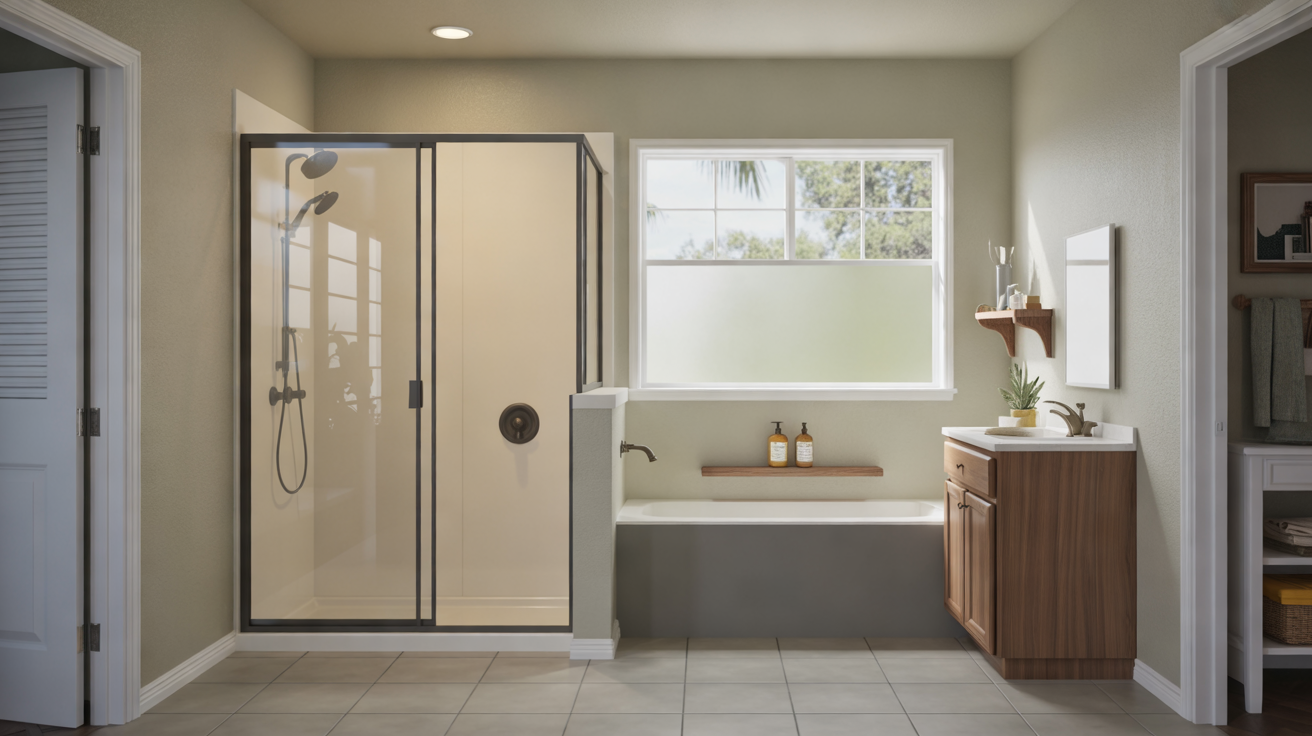
Eco-friendly shower replacement materials let you update your bathroom while reducing water use, chemical exposure, and long-term waste. In a humid climate like Cape Coral, FL, choosing the right materials also helps fight mold, mildew, and costly repairs down the road.
Below is a practical guide to the greenest options for shower walls, bases, doors, and fixtures, plus simple steps to make your next shower replacement as sustainable as possible.
What Makes a Shower Material Eco-Friendly?
Not every “green” label means the same thing. When comparing products, look at how they’re made, how long they last, and how they’re maintained.
Key factors to consider
- Durability: The longer a shower system lasts, the fewer replacements and landfill waste over time.
- Recycled content: Materials that reuse glass, stone, or metals reduce demand for new raw resources.
- Low-VOC and non-toxic: Low or zero volatile organic compound (VOC) adhesives, caulks, and coatings improve indoor air quality.
- Water efficiency: Fixtures that use less water without sacrificing comfort save both water and energy.
- Local sourcing: Materials manufactured closer to Cape Coral typically have a smaller transportation footprint.
- Easy maintenance: Smooth, non-porous surfaces require gentler cleaners, reducing harsh chemicals going down the drain.
Eco-Friendly Options for Shower Walls
Shower walls take up the most visual space, so choosing sustainable materials here has a big impact on both the environment and the look of your bathroom.
Recycled glass tile
Recycled glass tile is made from post-consumer or post-industrial glass, giving new life to materials that might otherwise end up in landfills.
- Pros: Highly durable, non-porous, stain resistant, and available in many colors and finishes.
- Eco benefit: Diverts glass from landfills and often requires less raw material extraction.
- Considerations: Requires proper waterproofing and grout maintenance to perform well in humid Cape Coral bathrooms.
Ceramic and porcelain tile
While not always made from recycled materials, high-quality ceramic and porcelain tiles are long-lasting and widely recyclable in some areas.
- Pros: Extremely durable, many styles, good for coastal designs.
- Eco benefit: Longevity means fewer replacements. Some brands offer recycled content or environmentally certified products.
- Considerations: Look for low-VOC grouts and adhesives, and lighter colors to keep the shower bright.
Solid surface panels (with recycled content)
Solid surface wall panels, often made from a blend of natural minerals and resins, can sometimes include recycled stone or other byproducts.
- Pros: Minimal seams, easy to clean, and mold resistant—ideal for Florida humidity.
- Eco benefit: Reduced grout means fewer harsh cleaners, and many options have long service lives.
- Considerations: Ask specifically about recycled content and low-VOC certification.
Acrylic walls and “greener” plastics
Acrylic and other plastic-based shower wall systems are common in modern shower replacement systems. While plastics come from fossil fuels, they can still play a role in a more eco-friendly bathroom when chosen carefully.
- Pros: Lightweight, non-porous, and easy to clean—less need for strong chemical cleaners.
- Eco benefit: Some manufacturers use recycled plastic or offer take-back programs.
- Considerations: Focus on durability and manufacturer responsibility rather than the lowest cost option.
Sustainable Shower Pans and Flooring
The shower base needs to be strong, slip-resistant, and resistant to water damage. Eco-friendly choices balance performance with responsible sourcing.
Recycled stone or composite shower pans
Composite bases blend stone aggregates (sometimes recycled) with bonding agents to create a sturdy, long-lasting pan.
- Pros: Solid feel underfoot, fewer flex issues, and modern, low-profile designs.
- Eco benefit: May contain recycled stone or byproducts from other industries.
- Considerations: Pair with non-slip flooring options or built-in texture for safety.
Tile with non-slip designs
Using smaller tiles with more grout lines or textured surfaces can create a safe, attractive, and green floor.
- Pros: Design flexibility, easier slope to the drain, and customizable looks.
- Eco benefit: Choose tiles with recycled content or environmental certifications.
- Considerations: Proper waterproofing is critical to prevent mold growth under the floor in humid climates.
Acrylic and fiberglass bases
These are common in walk-in shower replacement options. While not the “greenest” raw materials, they can reduce waste when installed correctly and maintained well.
- Pros: Lightweight, often compatible with one-day installations, and easy to keep clean.
- Eco benefit: Their main value is durability and low maintenance, not material origin.
- Considerations: Look for high-quality products with good warranties; long life equals less environmental impact.
Green Choices for Shower Doors, Fixtures, and Storage
Smaller components of your shower also present opportunities to make eco-conscious decisions.
Shower doors vs. curtains
Whether you choose a glass door or a shower curtain affects both style and sustainability. For a deeper comparison, see Shower Doors vs Shower Curtains.
- Glass doors: Tempered glass is long-lasting and easy to clean with mild products. Frameless or semi-frameless designs minimize metal usage.
- Eco tip: Choose clear or lightly frosted glass and squeegee after use to reduce hard water staining and cleaning chemicals.
Water-saving fixtures
Upgrading fixtures is one of the most effective ways to cut water and energy use in your bathroom.
- Low-flow showerheads: Modern designs can deliver a comfortable spray while using significantly less water.
- Pressure-balancing or thermostatic valves: Hold a steady temperature, helping you waste less water while adjusting.
- Eco tip: When upgrading shower fixtures, look for independent performance and efficiency ratings.
Built-in storage and niches
Thoughtful storage reduces clutter and can actually extend the life of your materials.
- Recessed niches: Keep bottles off the floor where water can pool, reducing staining and mildew.
- Materials: Finish niches with the same eco-friendly tile or panels used in the rest of the shower.
- Learn more: Browse ideas on the Best Shower Storage and Niche Ideas page.
Practical Steps to Make Your Shower Replacement Greener
Even if you cannot choose the “perfect” material in every category, small decisions add up to a more sustainable project.
- Plan carefully before demolition. A detailed plan reduces mistakes and rework. For help preparing, see Preparing Your Bathroom for Shower Replacement.
- Repair water damage correctly. Fixing leaks and mold behind the walls saves materials and improves indoor air quality. Learn more at Water-Damage and Mold Repair Before Shower Replacement.
- Choose low-VOC products. Ask for low-VOC caulks, sealers, and adhesives to limit chemical odors and off-gassing.
- Invest in quality over quantity. A well-constructed shower made from mid-range materials is usually greener than a cheap one that fails quickly.
- Commit to gentle, regular maintenance. Proper care extends the life of your new shower. See How to Maintain Your New Shower for simple routines.
Eco-Friendly Showers in Cape Coral: Local Considerations
Cape Coral homeowners face specific conditions that influence the best eco-friendly choices.
- Humidity and heat: Prioritize mold-resistant materials and designs with good airflow.
- Hard water: Smooth, non-porous surfaces are easier to keep free of buildup using milder cleaners.
- Hurricane season: Durable construction and moisture management behind the walls help protect your bathroom from long-term damage.
Working with a local shower replacement specialist who understands these conditions can help you select materials that are both eco-friendly and practical for the area. For guidance on choosing an installer, review Shower Replacement Near Me: How to Choose a Contractor.
FAQs About Eco-Friendly Shower Replacement Materials
Are eco-friendly shower materials more expensive?
Some recycled or specialty products cost more upfront, but they often last longer and may reduce water or cleaning costs over time. Comparing lifetime value, not just initial price, gives a more accurate picture. For a broader look at costs, see the Shower Replacement Cost Guide.
Can I do an eco-friendly shower replacement as a DIY project?
Some homeowners install prefabricated systems themselves, but correct waterproofing and ventilation are critical, especially in Florida’s climate. Mistakes can lead to water damage and wasted materials. Review DIY vs Professional Shower Replacement and Common Shower Replacement Mistakes to Avoid before deciding.
What is the easiest eco-friendly shower material to maintain?
Non-porous wall panels and solid bases are generally easiest to keep clean with gentle products. Fewer grout lines mean less scrubbing and reduced need for harsh chemicals.
Can I make my existing shower more eco-friendly without a full replacement?
Yes. Installing a low-flow showerhead, switching to non-toxic cleaners, resealing grout, and improving ventilation are all helpful steps. When the time comes for a full update, exploring custom shower replacement design ideas can help you plan an efficient, sustainable layout.