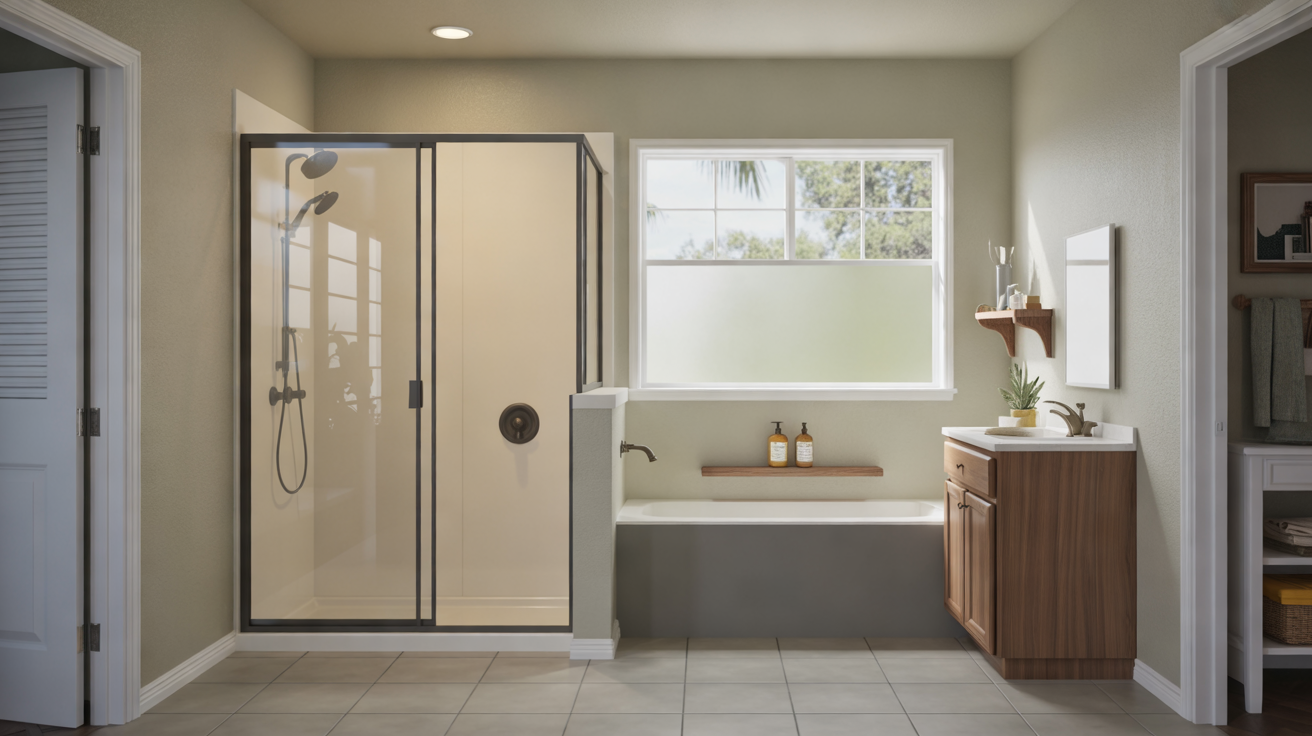
Custom shower replacement is your chance to turn a basic bathroom into a space that feels tailored to your life in Cape Coral. Instead of simply swapping old for new, you can choose shapes, materials, fixtures, and storage that fit your routines, mobility needs, and style. Below are practical design ideas to help you plan a shower that looks great and works beautifully day after day.
Start With Your Shower Layout
The layout is the foundation of any custom shower design. It affects comfort, safety, and how spacious your bathroom feels.
Walk-in vs. Alcove Shower
- Alcove shower: Fits between three walls, making it ideal if you are replacing a tub or existing shower. This is common in many Cape Coral homes and keeps plumbing changes minimal.
- Walk-in shower: Offers a more open, spa-like feel with fewer visual barriers. Often paired with glass panels, it can make a smaller bathroom feel larger.
For more walk-in options and considerations, see the dedicated guide on Walk-In Shower Replacement Options.
Low-Threshold and Barrier-Free Designs
A low or curbless entry is one of the most popular upgrades during shower replacement. It looks modern, makes cleaning easier, and improves accessibility.
- Low-threshold pans: A small curb keeps water in but reduces trip hazards.
- Curbless showers: Tile or solid-surface floors slope gently to the drain for a seamless transition.
If you are planning for aging in place or multi-generational living, explore more ideas in Senior-Friendly and Accessible Shower Designs and Low-Threshold and Barrier-Free Shower Options.
Choose Wall Materials and Style
Your shower walls set the tone for your entire bathroom. Consider appearance, maintenance, and budget when choosing materials.
Tile vs. Acrylic (and Other Surround Systems)
Tile and acrylic are two of the most common options for custom shower replacement. Each has strengths:
- Tile: Maximum design flexibility with endless colors, sizes, and patterns. Great for feature walls, niches, and custom layouts.
- Acrylic or solid-surface panels: Fewer grout lines, faster installation, and easy cleaning. Panels can mimic stone, marble, or tile patterns.
For a deeper comparison, visit Tile vs Acrylic Shower Walls Comparison and Types of Shower Replacement Systems.
Color and Pattern Ideas
- Light neutrals: Whites, creams, and soft grays brighten the room and reflect light—especially useful if your bathroom has a small window or none at all.
- Coastal tones: Soft blues, sea-glass greens, and sandy beiges create a relaxed coastal look that fits Cape Coral’s environment.
- Bold feature wall: Use patterned or darker tile on one wall, such as behind the shower head, and keep the others simple.
- Textured finishes: Subtle textures and matte finishes add visual interest and can help hide water spots.
Flooring and Shower Pan Design Ideas
The shower floor affects both the look and safety of your new shower. In a wet, humid climate, slip resistance is especially important.
Non-Slip Flooring Options
- Textured acrylic pans: Integrated non-slip surfaces built into the pan.
- Small-format tile: More grout lines mean better traction; popular sizes include 1x1 or 2x2 mosaics.
- Stone-look surfaces: Some solid-surface pans mimic river rock without the uneven feel.
For more ideas specific to safety and traction, see Non-Slip Flooring Options for Shower Areas.
Drain Styles
- Center drain: Common and compatible with many standard pans.
- Linear drain: Long, narrow drain usually along one edge—ideal for curbless showers and modern designs.
- Tile-in drain covers: Allow tile to be set into the cover for a nearly invisible look.
Smart Storage and Built-In Features
Custom design is about more than looks. Integrated storage keeps the shower clutter-free and easy to use.
Shower Niches and Shelves
- Recessed niches: Built into the wall between studs, ideal for bottles and small items.
- Corner shelves: Great when wall space is limited or you prefer a simpler layout.
- Long horizontal niches: Stretch across one wall for a sleek, modern look and extra storage.
Visit Best Shower Storage and Niche Ideas for layout tips, sizing suggestions, and common mistakes to avoid.
Seats, Benches, and Footrests
- Built-in bench: Runs along a wall, useful for shaving, stability, or relaxation.
- Corner seat: Takes up less floor space in smaller showers.
- Fold-down seat: Can be folded away when not in use, ideal for accessibility.
- Small footrest ledge: A compact shelf or corner block that simplifies shaving without a full bench.
Fixtures and Hardware Upgrades
Upgrading fixtures is one of the most effective ways to customize your new shower. It can also improve water efficiency and overall comfort.
Types of Showerheads
- Fixed showerhead: Simple and reliable, available in many spray patterns and finishes.
- Handheld shower: Excellent for rinsing, cleaning the shower, and assisting kids or anyone with mobility challenges.
- Dual shower system: Combines a fixed and handheld showerhead, often with a diverter valve.
- Rain showerhead: Mounted overhead for a spa-like experience; often paired with a handheld for flexibility.
Controls and Comfort Features
- Thermostatic valves: Maintain a steady temperature and help prevent sudden hot or cold bursts.
- Multiple body sprays: Add a luxury feel for those who want a spa-style shower.
- Water-saving fixtures: Reduce water use while still providing a comfortable spray.
For a deeper look at fixture choices and upgrades, explore Upgrading Shower Fixtures During Replacement.
Glass, Curtains, and Privacy Choices
The way you enclose your shower affects light, privacy, and maintenance.
- Frameless glass: Clean, modern lines and a more open feel. Pairs well with tiled showers.
- Semi-frameless or framed doors: Often more budget-friendly while still allowing natural light.
- Textured or frosted glass: Adds privacy but still lets in light, ideal if multiple people share the bathroom.
- Shower curtain: Flexible and easy to change for a new look.
Read more comparisons at Shower Doors vs Shower Curtains.
Planning for Safety, Maintenance, and Longevity
A smart custom design also anticipates long-term use and care.
- Grab bars and extra support: Plan backing in the walls during replacement so bars can be added now or in the future.
- Easy-clean materials: Consider large-format tile, acrylic, or solid-surface surrounds with minimal grout.
- Proper waterproofing: Address any moisture issues before installation. Learn more at Water-Damage and Mold Repair Before Shower Replacement.
- Care routine: Once your shower is installed, follow simple maintenance steps from How to Maintain Your New Shower.
Putting Your Design Ideas Into a Plan
As you collect ideas, it helps to organize them into a clear plan before speaking with a contractor in Cape Coral.
- Measure your existing shower or tub area and note window, door, and plumbing locations.
- Decide on layout changes (walk-in vs alcove, curb vs curbless).
- Choose your preferred wall and floor materials, plus two backup options in case of availability or budget changes.
- List must-have features (niches, bench, grab bars, handheld shower) and “nice-to-have” options.
- Review budget ranges at Shower Replacement Cost Guide and Financing Options for Shower Replacement.
- Decide whether you’ll hire a pro or attempt some work yourself using DIY vs Professional Shower Replacement.
For more planning resources, the Blog and Shower Replacement FAQs offer additional guidance.
FAQs About Custom Shower Replacement Design
How do I choose the right size shower for my bathroom?
Start by measuring the existing footprint. Many replacements use the same space as an old tub or shower, but small layout shifts can greatly improve comfort. If space is tight, see Shower Replacement for Small Bathrooms for space-saving ideas.
Can I convert my bathtub into a custom shower?
In many cases, yes. A tub-to-shower conversion is common and can open up more design possibilities for niches, seating, and low-threshold entries. For step-by-step planning, visit the Bathtub to Shower Conversion Guide.
Which design choices add the most long-term value?
Neutral colors, quality waterproofing, non-slip flooring, and accessibility-ready features (like blocking for future grab bars) tend to appeal to future buyers. Learn more in Shower Replacement and Home Resale Value.
How eco-friendly can a custom shower be?
You can choose low-flow fixtures, long-lasting materials, and products made with recycled content. For more sustainable options, see Eco-Friendly Shower Replacement Materials.
To learn more about Shower Replacement Cape Coral, visit the About page or explore more planning guides on the site before starting your custom shower project.