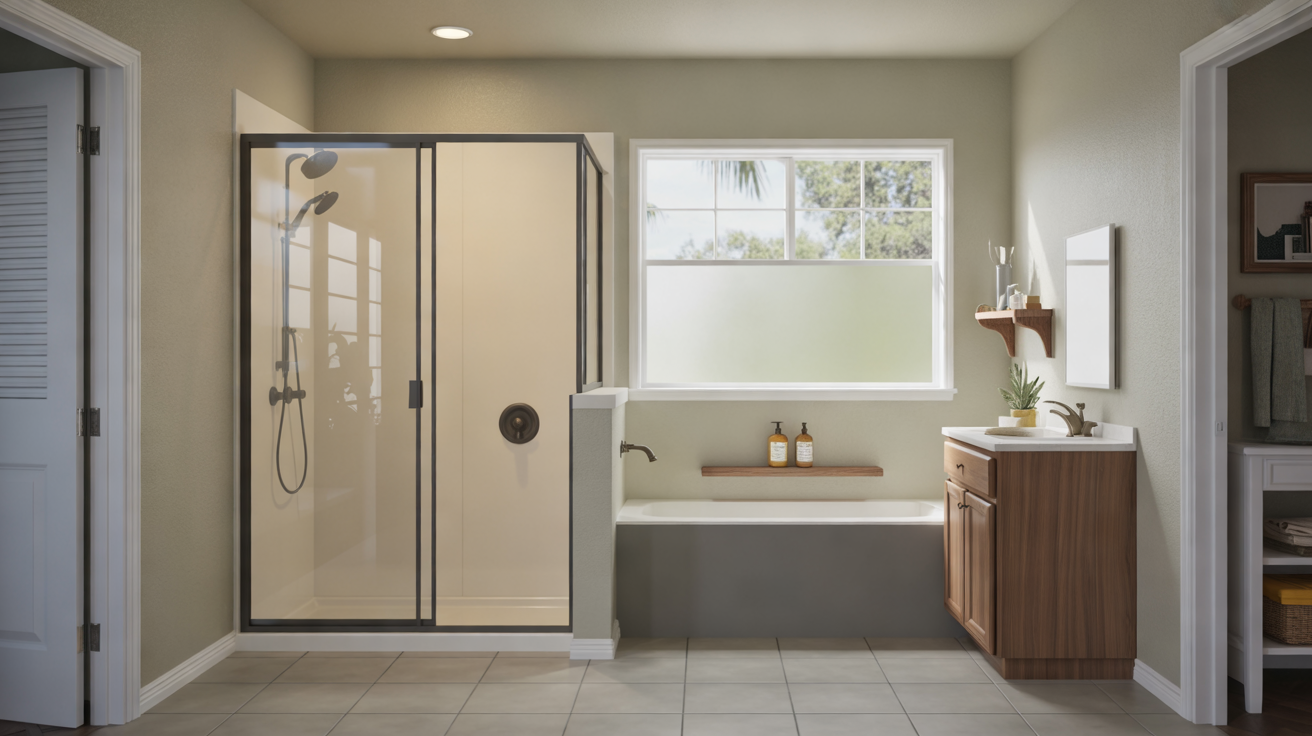
Slippery shower floors are a major cause of falls at home, especially for kids, older adults, and anyone with limited mobility. The good news is that you have several non-slip flooring options that can make your shower safer without giving up style. On this page, you’ll find the most common slip-resistant materials, how they compare, and what works well in Cape Coral’s warm, humid climate.
What Makes a Shower Floor Non-Slip?
A truly non-slip shower surface does more than just feel “textured.” It needs the right combination of material, surface pattern, and maintenance so it stays safe over time.
Key safety factors
- Traction when wet: Surfaces should feel grippy under bare feet with soap and water present, not just when dry.
- Drainage: Good slope and channels let water move away quickly so you’re not standing in a puddle.
- Texture you can clean: Too smooth is slippery; too rough can trap soap scum and be hard to maintain.
- Durability in humidity: In Cape Coral’s climate, materials must handle moisture and temperature swings without warping or peeling.
Many shower replacement systems combine multiple features—like textured bases plus added non-slip coatings—to increase safety.
Popular Non-Slip Flooring Options for Shower Areas
Below are the most common non-slip options you’ll see in modern shower replacements, with pros, cons, and best uses.
1. Textured acrylic shower bases
Acrylic shower pans with a molded, textured floor are one of the most popular choices for replacement showers.
Pros:
- Built-in slip resistance with patterns like small bumps or subtle ribs.
- Warm and comfortable underfoot compared to tile.
- Non-porous surface resists mildew and is easy to wipe clean.
- Available in many sizes to fit tub-to-shower conversions and walk-in showers.
Cons:
- Deep or aggressive textures can be harder to scrub if soap scum builds up.
- Can scratch if abrasive cleaners or pads are used.
Textured acrylic works well if you want a low-maintenance, one-piece base. It’s commonly used in walk-in shower replacements and bathtub-to-shower conversions.
2. Fiberglass shower pans with non-slip finish
Fiberglass bases are lightweight and usually come with a textured or matte bottom for traction.
Pros:
- Generally cost-effective and widely available.
- Integrated texture designed for use in wet areas.
- Quick to install as part of many replacement systems.
Cons:
- Finish can dull over time if harsh cleaners are used, reducing traction.
- More prone to surface wear if not properly supported underneath.
Fiberglass pans can be a practical option when paired with the right wall system. For a comparison of wall materials, see Tile vs Acrylic Shower Walls.
3. Small-format ceramic or porcelain tile with textured surface
Tile gives you the most design flexibility and, when chosen correctly, can be quite slip-resistant.
Best practice: For shower floors, smaller tiles (typically 1"×1", 2"×2", or small mosaics) with a matte or textured finish work best.
Pros:
- Grout lines add natural grip and prevent sliding.
- Huge range of styles, patterns, and colors.
- Porcelain options are dense, durable, and water-resistant.
Cons:
- More grout to maintain—needs regular cleaning and sealing.
- Improper tile choice (large, glossy tiles) can be very slippery.
- Can feel cooler underfoot than acrylic in air-conditioned homes.
If you love the look of tile, pay close attention to both the tile size and the tile’s slip rating (see the safety ratings section below).
4. Slip-resistant coatings and treatments
Non-slip coatings can be applied over existing tile or smooth bases to improve traction.
Pros:
- Helpful for improving safety without full replacement.
- Some clear treatments don’t change the look of tile or stone.
- Can be reapplied as needed.
Cons:
- Not all products are compatible with every surface—manufacturer directions matter.
- Most are not permanent and may wear in high-traffic areas.
- Professional installation often provides more reliable results than DIY kits.
Coatings can be a good interim step, but during a full shower replacement you’ll typically want a base that’s inherently slip-resistant.
5. Built-in non-slip bands and inlays
Some modern shower pans include factory-installed non-slip bands or inlays in key standing zones.
Pros:
- Extra grip exactly where you step when entering or exiting.
- Often color-matched or subtly integrated for a clean look.
- Less likely to peel than stick-on mats when they are part of the base.
Cons:
- Placement is fixed—you can’t easily adjust where they go.
- Texture can feel more pronounced under bare feet for some users.
How to Choose the Right Non-Slip Option for Your Bathroom
The best non-slip flooring for your shower depends on who uses the bathroom, your budget, and the type of remodel you’re planning.
1. Consider who’s using the shower
- Seniors or people with mobility challenges: Combine a slip-resistant base with a low-threshold or barrier-free entry, grab bars, and a sturdy shower seat.
- Families with kids: Look for forgiving, easy-to-clean textures that resist soap buildup and aren’t too rough on bare feet.
- Guest or resale-focused baths: Aim for safe but neutral choices, like textured acrylic or porcelain mosaics in classic colors.
2. Match the floor to your shower system
If you’re installing a full replacement system, you’ll choose from pans designed to work with specific wall materials. For help comparing systems, see Types of Shower Replacement Systems and Custom Shower Replacement Design Ideas.
3. Think about cleaning and maintenance
Any non-slip surface needs regular cleaning to stay safe. Smooth-but-textured acrylic tends to be lower maintenance, while small tiles with many grout lines may take a bit more care. For long-term care tips, visit How to Maintain Your New Shower.
Understanding Slip-Resistance Ratings
When shopping for tile or other materials, you may see slip-resistance ratings. These give you a sense of how a surface performs under wet conditions.
- COF (Coefficient of Friction): Higher numbers generally mean more grip. Look for products recommended specifically for shower floors.
- Manufacturer designations: Many tile lines are labeled “floor-rated,” “shower floor approved,” or “wet area suitable.” Use those labels as a guide.
If a product is marketed mainly for walls, it’s usually not appropriate for shower floors, especially in smooth or glossy finishes.
Extra Safety Features to Pair with Non-Slip Flooring
Your floor is only one part of a safe shower. Combine a non-slip surface with smart design details for even better protection.
- Grab bars: Solid, properly anchored bars give you something to hold onto when entering or exiting.
- Shower seats or benches: Helpful for shaving, balance issues, or anyone who tires easily.
- Thoughtful storage: Built-in niches keep bottles off the floor where they can create tripping hazards. For inspiration, see Best Shower Storage and Niche Ideas.
- Clear entries: Avoid clutter near the shower threshold and consider wider openings in senior-friendly and accessible designs.
Practical Steps for Improving Shower Floor Safety
- Assess your current floor. Is it glossy, cracked, or uneven? Are there loose tiles or worn spots?
- Identify problem areas. Pay attention to where you step in and out, and where water tends to collect.
- Decide between upgrade and full replacement. A coating or mat may help in the short term. For long-term safety and appearance, a new non-slip base is often best.
- Plan around timing and budget. Learn more about project timing in How Long Does a Shower Replacement Take? and budget ranges in the Shower Replacement Cost Guide.
- Work with a shower specialist. A professional can recommend materials that perform well in Cape Coral’s climate and meet your household’s safety needs. If you’re weighing options, see DIY vs Professional Shower Replacement.
FAQs about Non-Slip Shower Flooring
Do I still need a bath mat if my shower floor is non-slip?
Many modern shower bases are safe without loose mats, which can shift and create their own hazards. If you prefer an extra layer, choose a mat designed for showers with strong suction and remove it regularly to clean underneath.
Can you make an existing tile shower floor less slippery?
Yes. Options include non-slip coatings, etched treatments, and adding a properly sized shower mat. However, if tiles are large, glossy, or damaged, it may be more effective to replace the shower pan with a purpose-built non-slip base. For pan-specific information, visit Shower Pan Replacement: Materials and Costs.
Is there a difference between “textured” and “non-slip” labels?
Not all textured surfaces are truly slip-resistant when wet. Look for products specifically rated or advertised for shower floors or wet areas, not just “textured” or “decorative.”
Will a non-slip shower floor be harder to clean?
Some highly textured surfaces and heavy grout lines can trap more residue, but choosing quality materials and cleaning regularly with non-abrasive products keeps maintenance manageable. Many homeowners find textured acrylic bases to be a good balance between traction and easy cleaning.
If you’re planning a broader update—like switching from a tub to a walk-in shower or adding accessibility features—explore more topics on our blog or learn about shower replacement vs full bathroom remodel before you start.